
Railroad History (USA): Facts, Timeline, Definition
Last revised: October 10, 2024
By: Adam Burns
Railroad history in the United States is nearly as old as the country itself, dating back to the mid-1820s. As we know, this great nation would not have grown and prospered as it did without the railroads, which brought together the young country and allowed for unprecedented prosperity.
The "Golden Age" lasted from roughly the 1880s until the 1920s, at which time other modes (automobiles and airplanes) slowly eroded the railroads' transportation monopoly.
In addition, stifling government regulation beginning in the early 20th century eventually choked them to the point of desperation.
Unable to set their own freight rates, abandon unprofitable routes, or rid themselves of money-losing passenger trains many were on the brink of collapse by the 1970s; names like the Penn Central, Rock Island, Milwaukee Road, Reading, Jersey Central, and others.
Following deregulation in 1980 the industry made a comeback and today is witnessing a renaissance. In this section we will look at the history of our country's involvement with trains from its earliest beginnings in the 1820s through today.
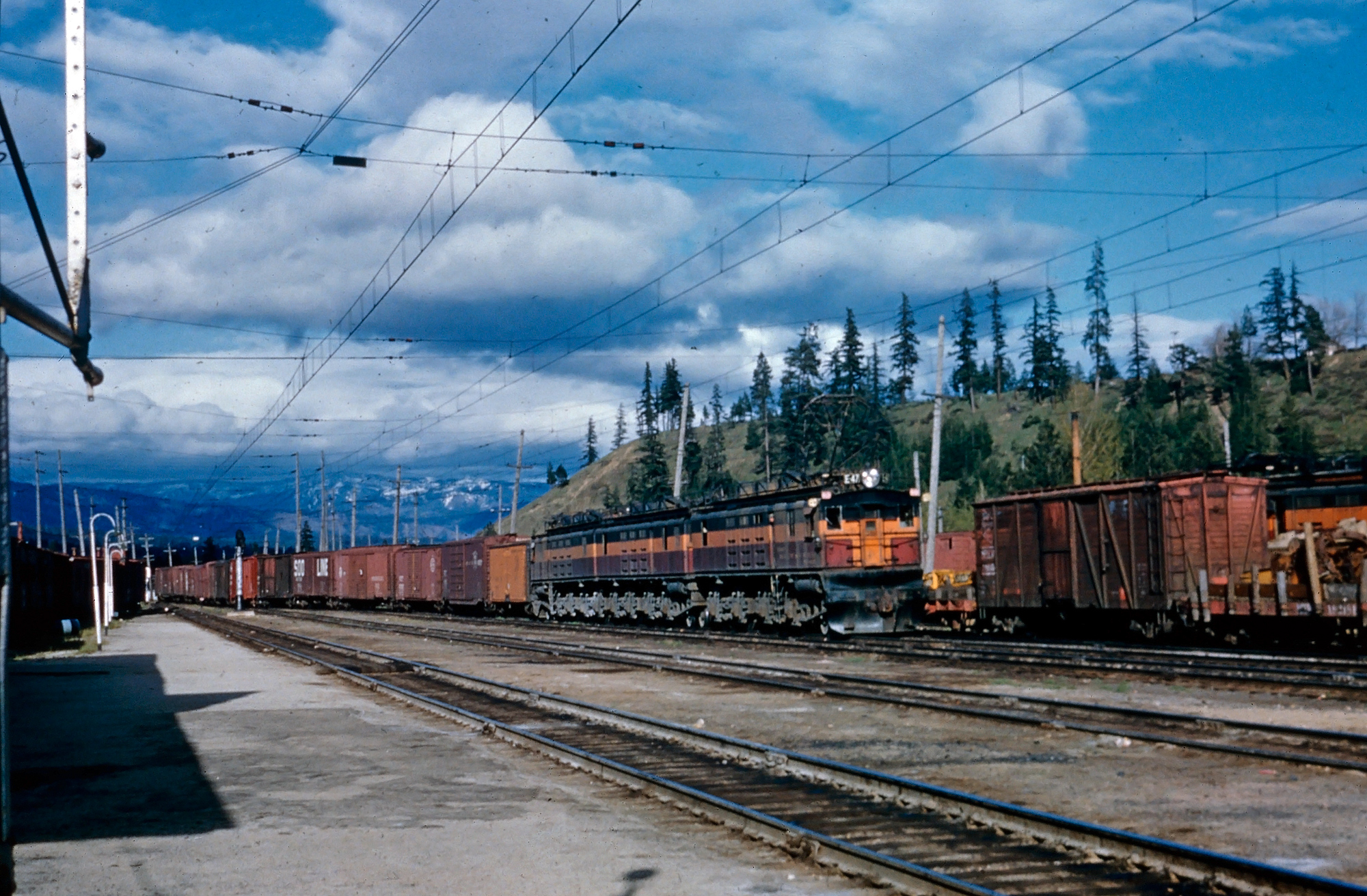 Taken from the depot platform, Milwaukee Road boxcab set E47 has arrived at Cle Elum, Washington with a westbound freight, circa 1958. Today, the depot and substation still stand, preserved by the Cascade Rail Foundation. American-Railsc.com collection.
Timeline
Railroads in America can be traced back to 1815 when Colonel John Stevens gained the first charter in North America to build the New Jersey Railroad Company, although it was not constructed until 1832.
The NJRR later went on to become part of the Pennsylvania Railroad's far-reaching network. Colonel Stevens also tested the first type of steam locomotive in 1826, when he showcased his "Steam Waggon" (basically a steam-powered horse carriage) on a small circular track he had built at his estate in Hoboken, New Jersey.
Later, in August of 1829 Horatio Allen, a chief engineer for the Delaware & Hudson Canal Company (which went on to become the Delaware & Hudson Railway) tested an early English steam locomotive on a 16-mile stretch of company-owned track between Honesdale and Carbondale, Pennsylvania.
The locomotive was named the Stourbridge Lion, a very simple two-axle machine with a vertical boiler. It, along with three other similar designs, was envisioned to handle coal from the D&H mines at Carbondale to Honesdale.
Alas, only the Lion was ever tested and ultimately proved too heavy for the track, spending most of its time stored away in a shed.
At A Glance
$1,485.00 (1919) $1,820.00 (1920) $1,445.00 (1933) $2,720.00 (1945) $3,763.00 (1950) $7,490.00 (1965) $37,716.00 (1987) | |
1916 = 1 billion 1940 = 450 million | |
Until 1956 = $1 million 1956 = $3 million 1965 = $5 million 1978 = $50 million 1997 = $256 million 2019 = $505 million 2021 = $900 million (2019) | |
$3.353 billion (1916) $6.31 billion (1919) $3.138 billion (1933) $8.986 billion (1945) $9.47 billion (1950) $10.425 billion (1965) $26.622 billion (1987) $66 billion (2020) | |
Sources:
- Stover, John. Routledge Historical Atlas of the American Railroads, The. New York: Routledge, 1999.
- Association Of American Railroads
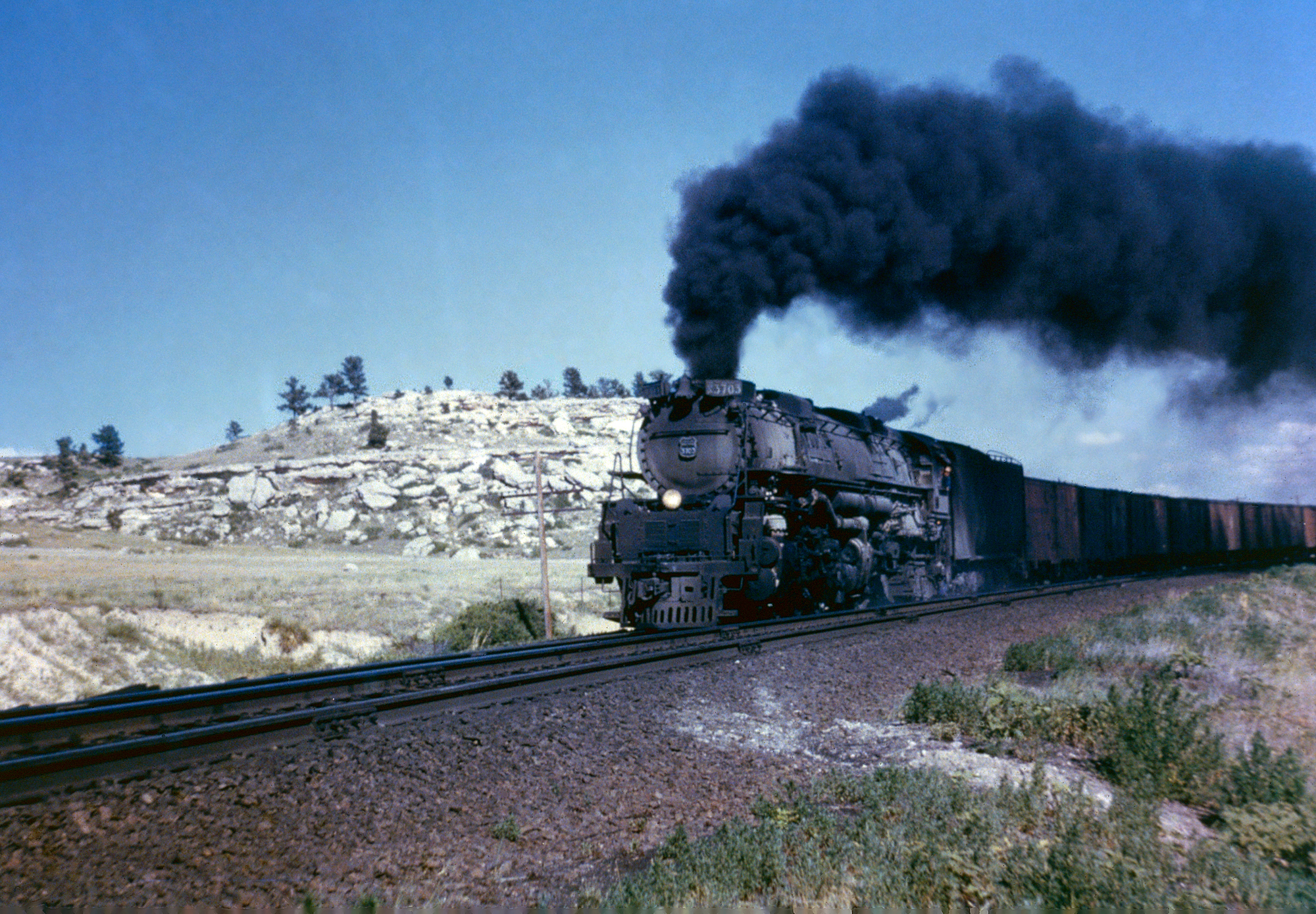 Union Pacific 4-6-6-4 #3703 hustles west just east of Potter, Nebraska on July 10, 1959. Richard Wallin photo. American-Rails.com collection.
A year later, in August of 1830, the three year old Baltimore & Ohio carried out trials of the Tom Thumb, the work of Peter Cooper. A month after this event the South Carolina Canal & Railroad Company (SCC&RR) tested its Best Friend of Charleston.
The SCC&RR would also be remembered as the first to haul a revenue train with an American-built design when its Best Friend of Charleston, a product of the West Point Foundry in New York, carried paying customers on December 25, 1830.
While the steam locomotive had proven its worth on the South Carolina road the B&O is recognized as our nation's first common carrier (a corporate entity which is expected to haul anything, within reason, offered to it by the general public).
The railroad was chartered on April 24, 1827 to solidify Baltimore's standing as one of America's important ports and provide competition against New York's Erie Canal.
Shortly after B&O's creation merchants in Charleston, South Carolina chartered the aforementioned South Carolina Canal & Railroad Company intended to link Charleston with Hamburg (along the Savannah River).
As the success of these operations, and others, grew railroad mania struck the nation. The new form of transportation could operate in all types of weather and move people and goods at previously unheard of speeds.
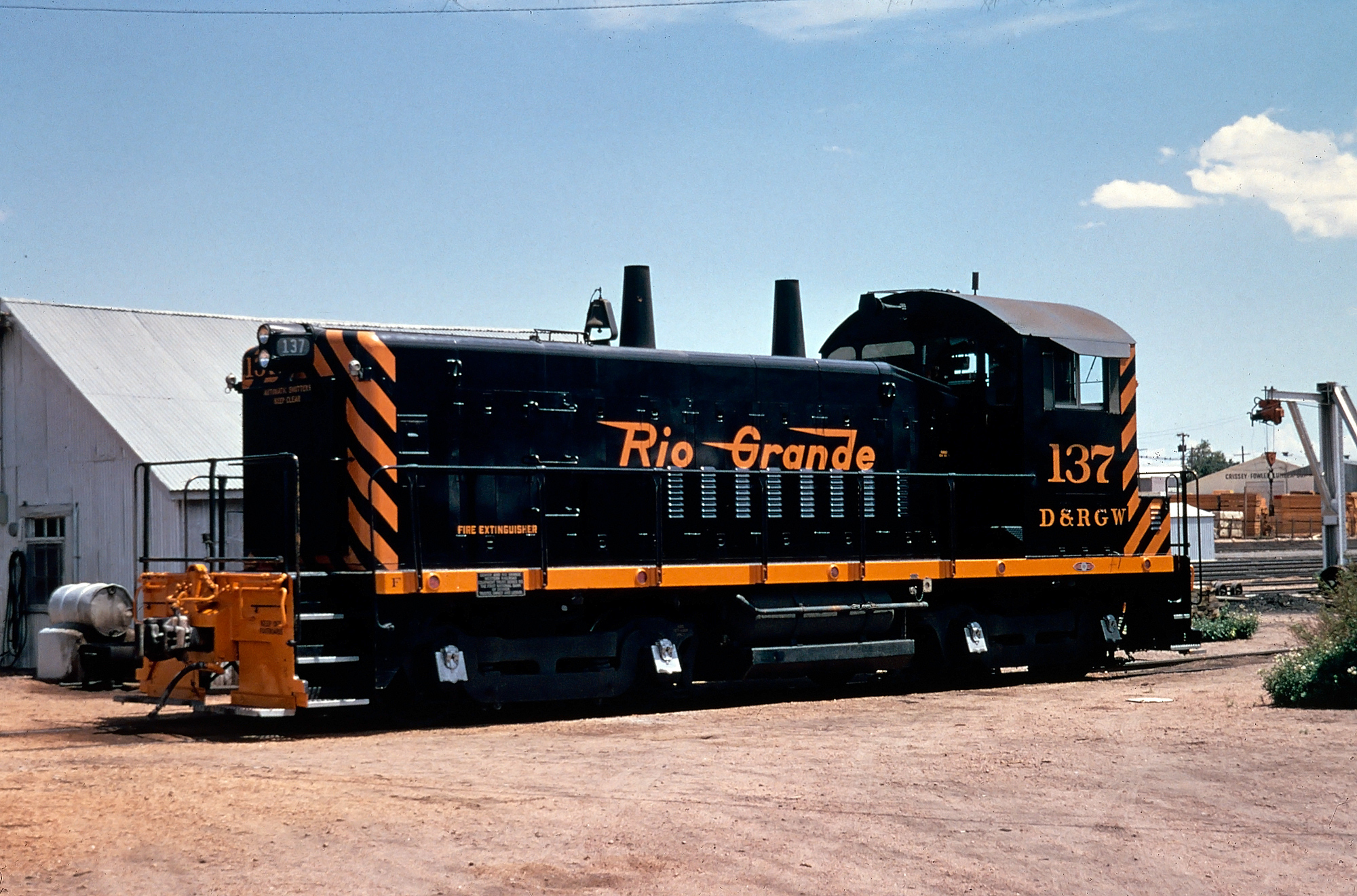 Rio Grande SW1200 #137 lays over in Colorado Springs, Colorado, circa 1970. Robert Eastwood, Jr. photo. American-Rails.com collection.
By 1840, states east of the Mississippi River boasted over 2,800 miles of track and a decade later that number had more than tripled to over 9,000. During these early years much of the trackage was still disconnected and largely concentrated in the Northeast.
There were also a variety of different gauges in service, ranging from 4 feet 8 1/2 inches (which later became standard) to six feet.
Unfortunately, traveling could be a tricky, proposition as railroads saw no need to develop safe operations. Even after development of modern "T"-rail, old strap-iron rail was still used for many years.
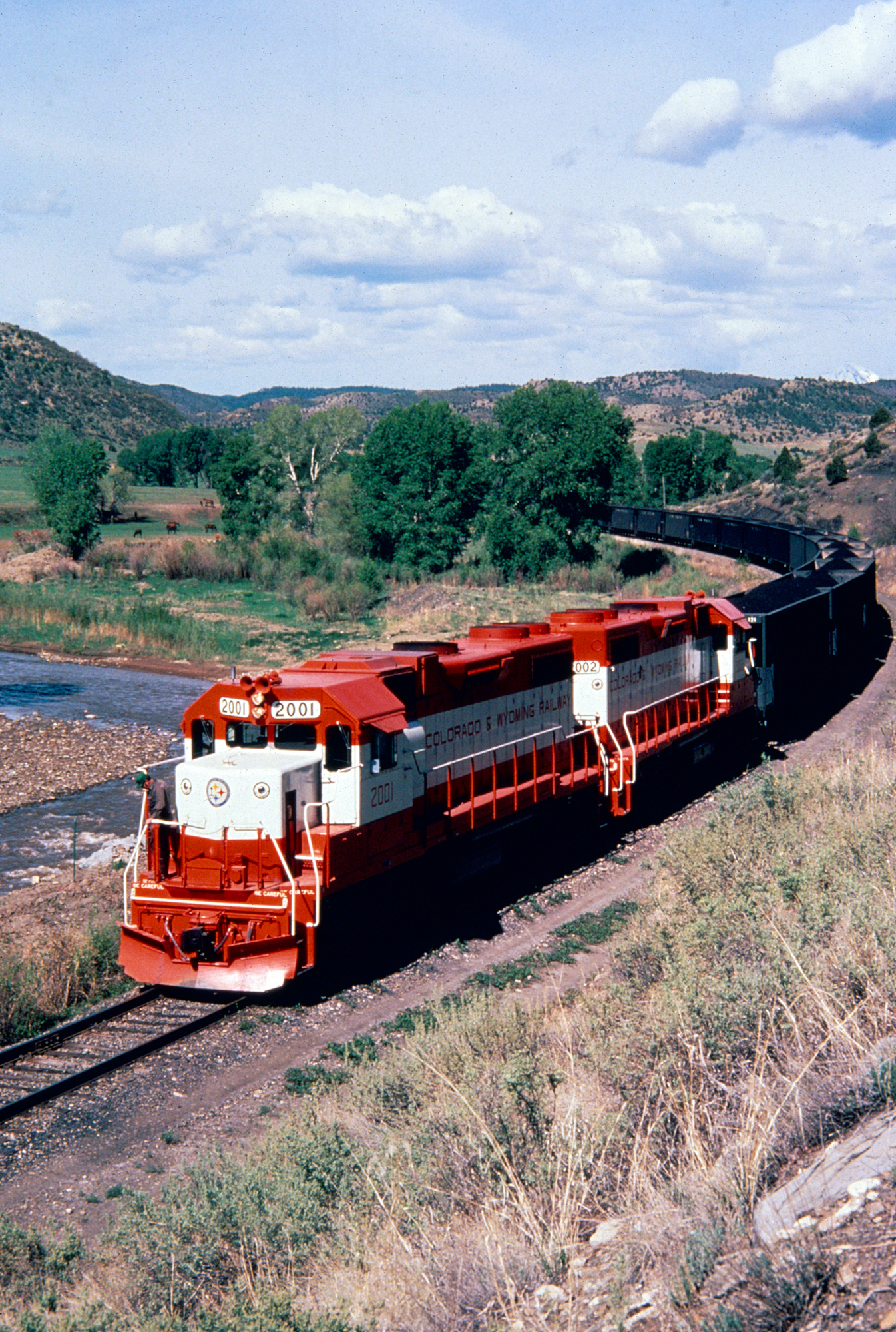 Colorado & Wyoming GP38-2's #2001 and #2002 have eastbound loads skirting the Purgatoire River just east of Weston, Colorado in the summer of 1974. American-Rails.com collection.
This led to cases of deadly "snake heads" where iron straps came loose from their attached wooden planks and tore into the under-frame of cars, injuring or killing passengers. In addition, cars themselves were not reinforced to better withstand the carnage during derailments.
Railroads used their power to influence politicians and avoid infrastructure improvement and safety enhancements, such as knuckle-couplers and air brakes. Such things only cost money.
In their greed they even refused to interchange freight with one another. This arrogant attitude eventually led to extreme regulatory oversight.
Inventor
Who invented the railroad? As mentioned elsewhere in this article, the first chartered railroad in the United States was the New Jersey Railroad Company of 1815 while the Granite Railway was the first actually put into service in 1826.
However, railroading's roots can be traced back centuries before the modern incarnation was born during the 19th century. As with many of our contemporary transportation technologies, the railroad came about gradually over time.
Many different individuals are recognized for developing a number of different devices which found their way into what would now be described as the modern-day railroad of the 1820's.
According to historian Mike Del Vecchio's book, "Railroads Across America," the very first railroad-like operation was opened in England during 1630 which used wooden rails, with wooden cross-ties (or "sleepers") for lateral support, to haul coal.
The first known implementation of iron rails occurred at Whitehaven, Cumberland in 1740, followed by William Jessop's (Loughborough, Leicestershire) invention of the flanged wheel in 1789. The steam engine is attributed to Thomas Newcomen who received a patent for his design in 1705.
It was later improved upon by James Watt in 1769 who realized expanding steam was much more powerful and efficient than Newcomen's condensing version. He first employed the engine in steamboats, which later made their way to the United States.
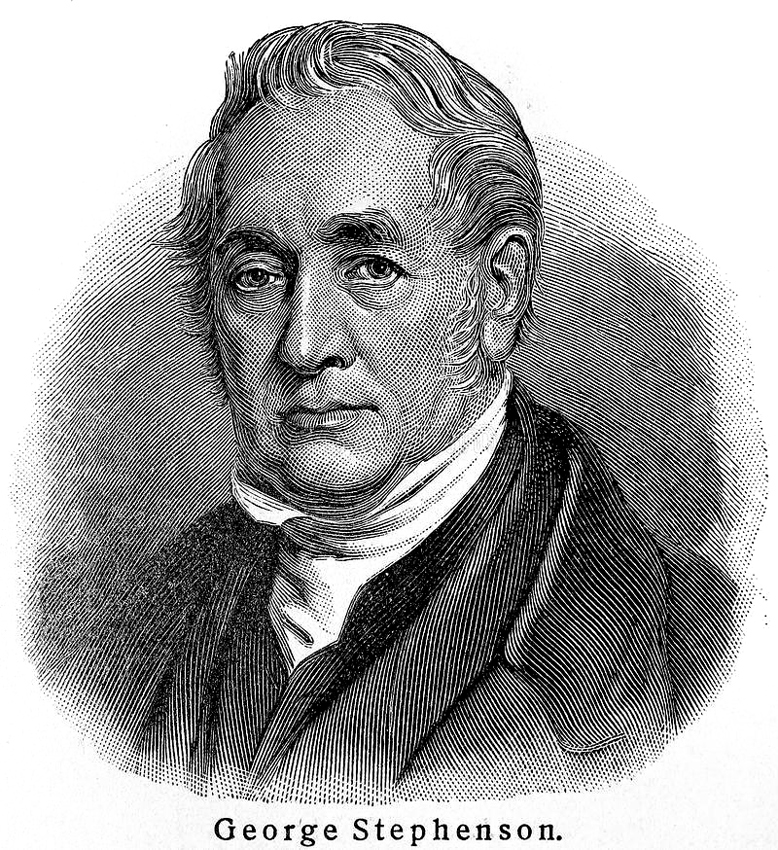 George Stephenson is credited as inventor the modern railroad when the Stockton & Darlington was placed into service in 1825.
Before Colonel John Stevens tested his "Steam Waggon" in 1826, the first patent for a steam locomotive is credited to Englishmen Richard Trevithick and Andrew Vivian in 1802.
It entered service in 1804 along the Merthyr-Tydfil Railway in South Whales where it pulled loads of iron ore along a tramway. Two decades would pass before the first modern version appeared, the work of George Stephenson.
Although often overlooked, the very first device which could be described as a "locomotive" was the work of a Frenchman, Nicolas-Joseph Cugnot, in 1769. It was steam-powered but did not run along a fixed trackway.
Today, this historic piece of engineering still survives, housed and on display at the Musée des Arts et Métiers in Paris. All modern locomotives and automobiles can trace their heritage back to this machine.
Once more, Britain earns the recognition as putting the first contemporary railroad into operation when the Stockton & Darlington Railway formally opened on September 27, 1825.
Mr. George Stephenson, a well-known builder of early steam locomotives, was also heavily involved in this project: he surveyed the route, gauged the rails to 4 feet, 8 inches (only a 1/2-inch narrower from the width which would later be recognized worldwide as standard-gauge); and, of course, furnished the locomotives.
His little 0-4-0, named Active (later renamed Locomotion No. 1) was placed into service that day, earning Stephenson recognition as creator of the modern railroad. His designs would also find their way onto early U.S. railroads until American builders became well-established.
For their many advantages, some in public simply did not like the iron horse. As John Stover points out in his book, "The Routledge Historical Atlas Of The American Railroads," one school board in Ohio described them as a "device of the devil" while those overseeing the Massachusetts turnpike called them "cruel turnpike killers" and "despisers of horseflesh."
There was even a claim that rail travel would cause a "concussion of the brain." Despite corporate malfeasance and the public's weariness, the efficiency and speed trains offered could simply not be argued.
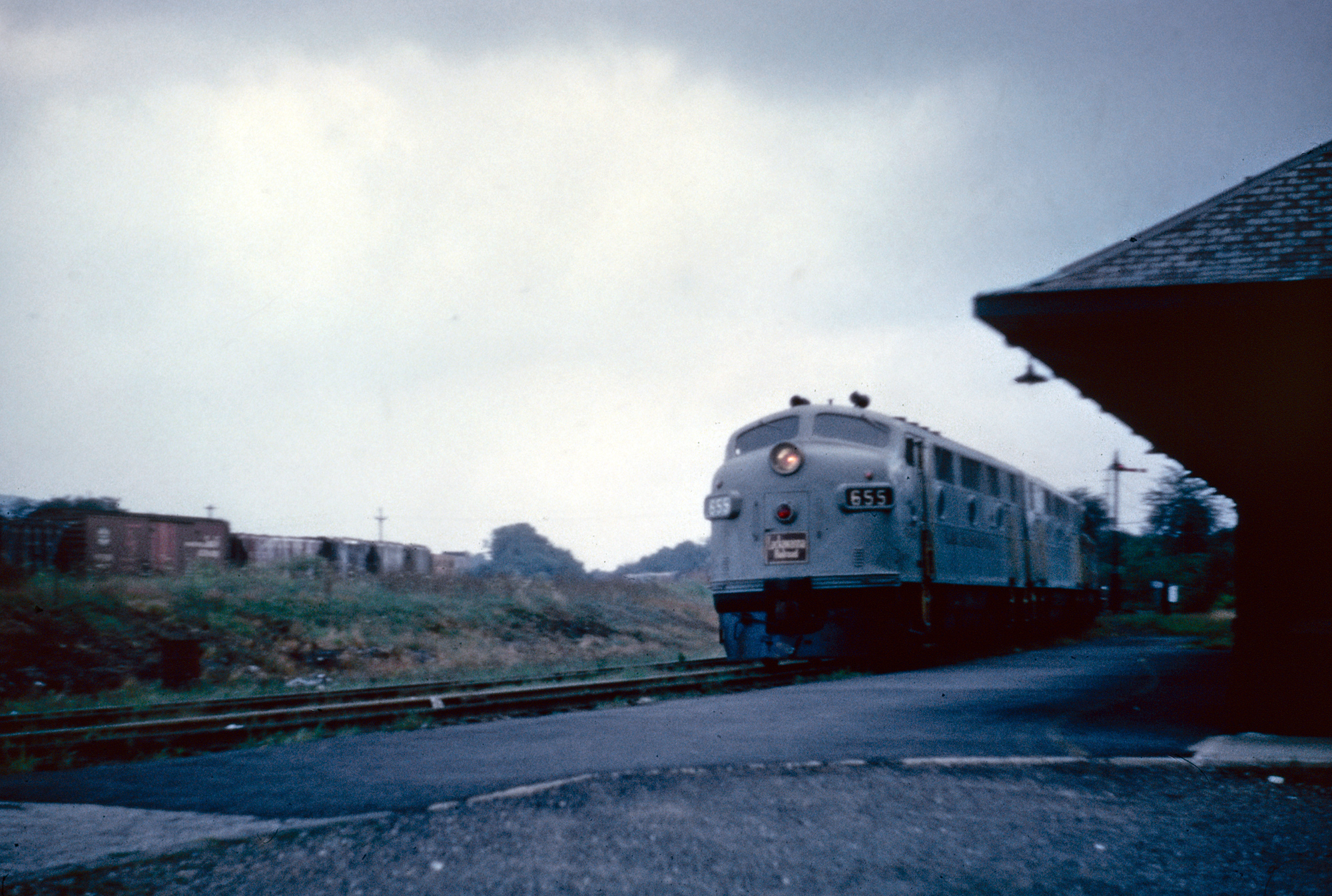 An interesting A-B set of Delaware, Lackawanna & Western F3's, wearing only a grey-dip livery, are westbound at Washington, New Jersey. Date not recorded (likely late 1940s/early 1950s). American-Rails.com collection.
During the Civil War railroads once more proved their worth as they quickly transported men and material to the front lines at speeds not previously possible.
The North effectively harnessed this advantage, as historian John P. Hankey points out in his article, "The Railroad War: How The Iron Road Changed The American Civil War," from the March, 2011 issue of Trains Magazine.
Its ability to do so was predominantly why it won the war. Before hostilities had ended efforts were already underway to link the entire continent by rail.
With the creation of the Pacific Railway Act, signed into law by President Abraham Lincoln on July 1, 1862, authorizing construction of the Transcontinental Railroad.
The new legislation formed the Union Pacific Railroad to build west from the Missouri River at Omaha, Nebraska while the Central Pacific struck out eastward from Sacramento, California. Both companies were given large tracts of land to complete their respective sections.
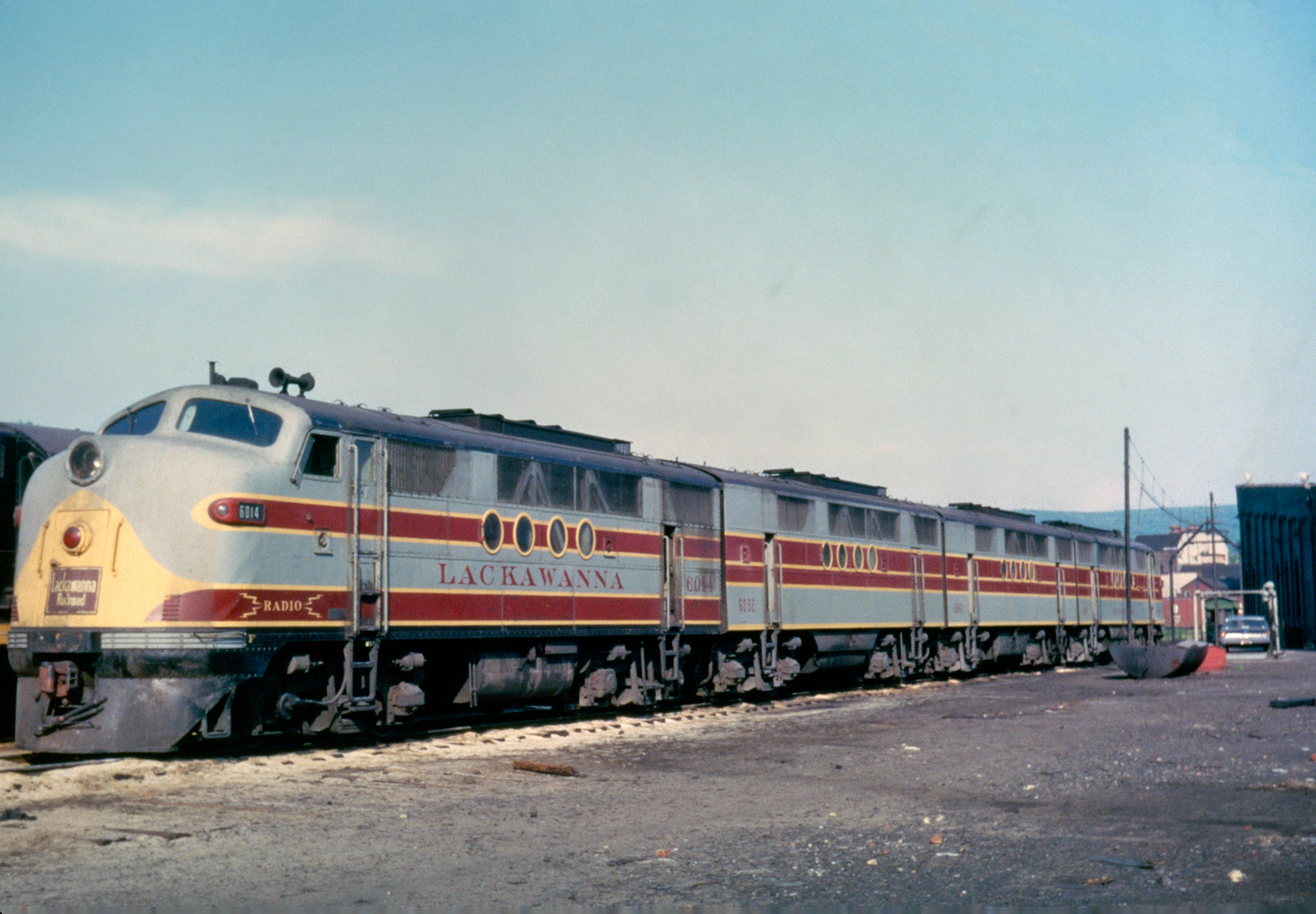 In this early Erie Lackawanna scene a handsome A-B-B-A set of former Delaware, Lackawanna & Western FTs layover in Binghamton, New York, circa 1961. American-Rails.com collection.
After several years of hard work, particularly for the Central Pacific, the two met at Promontory Point, Utah during a formal ceremony held on May 10, 1869.
Without the Pacific Railway Act our country's history would likely be very different as rail travel opened the west to new economic opportunities.
After the Transcontinental Railroad's completion the industry exploded; by the 1890s there were more than 163,000 miles in operation.
Eventually, four major railroads established direct lines from the Midwest to West Coast including the Great Northern, Northern Pacific, Santa Fe, and Chicago, Milwaukee, St. Paul & Pacific (Milwaukee Road) while others worked together in linking both points.
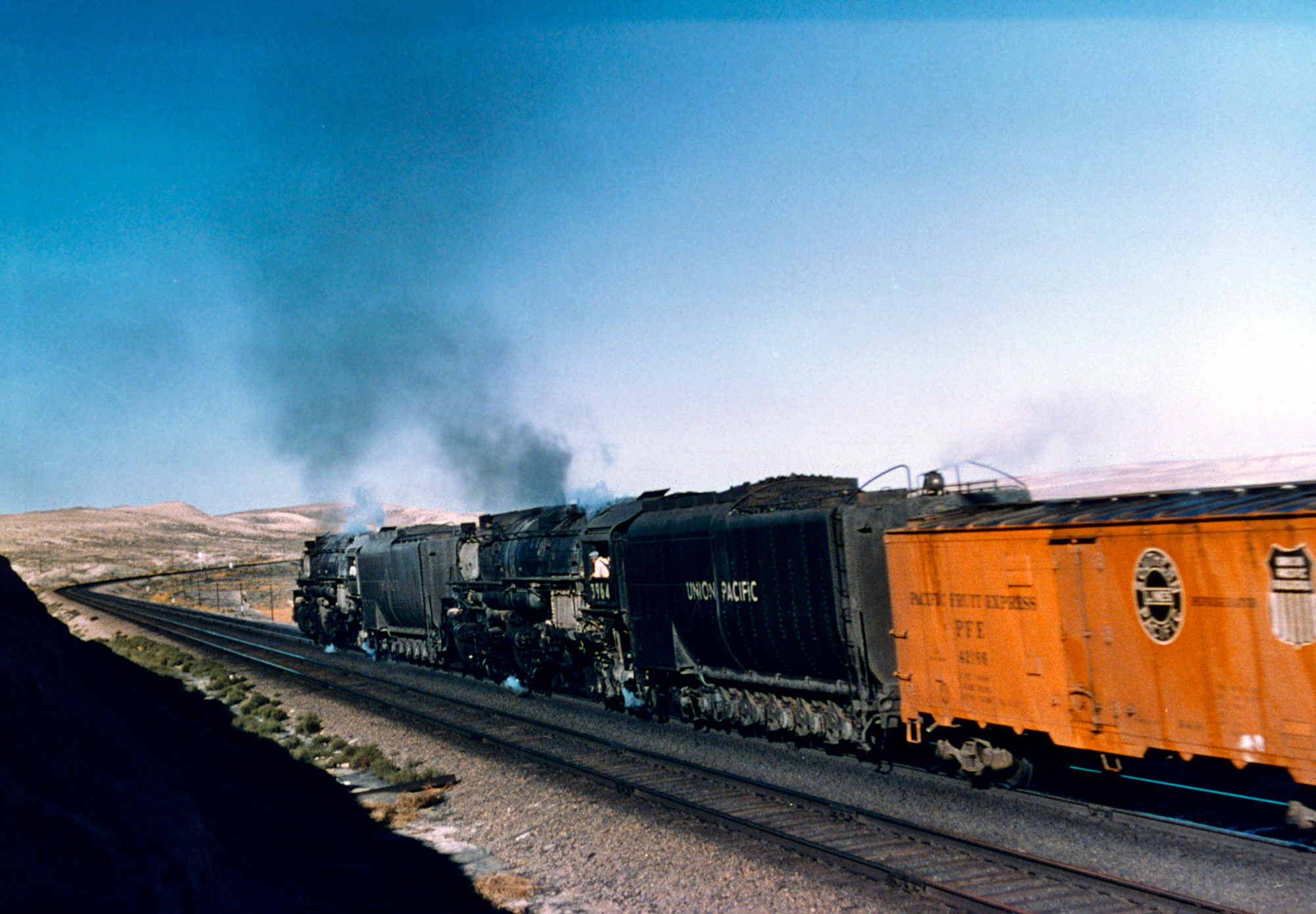 Union Pacific 4-6-6-4 #3944 and #3964 hustle a time freight westbound near Red Desert, Wyoming on September 3, 1955. J.E. Shaw photo. American-Rails.com collection.
The era also saw many other advances as the late historian Jim Boyd notes in his book, "The American Freight Train." After several years of distrust a standard track gauge of 4 feet, 8 1/2 inches was adopted during the 1880s along with development of the automatic coupler and air brake.
All three initiatives proved revolutionary, allowing for greater efficiency and much safer operations. From the late 19th century though the 1920's railroads enjoyed their greatest dominance and profitability; in particular was the year 1916, which saw mileage peak at over 254,000 and railroads carried virtually 100% of all interstate traffic.
National Mileage
Below is a timeline of railroad mileage throughout the years:
1840: 2,808 Miles
1850: 9,021 Miles
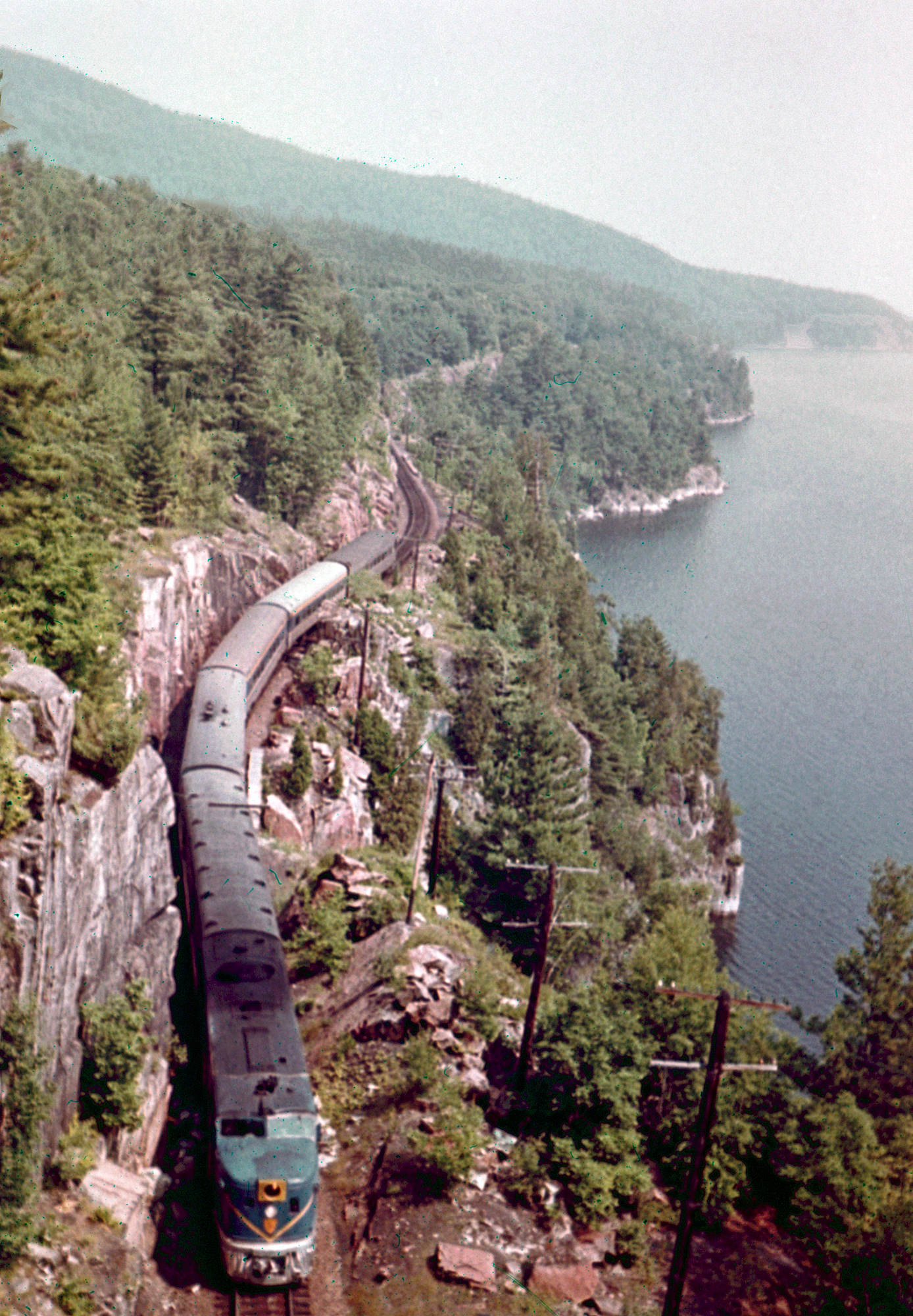 Delaware & Hudson's southbound "Laurentian" hugs the red rocks along Lake Champlain during the late 1960's. Jim Shaughnessy photo. Author's collection.
1860: 30,000+ Miles
1870: 52,922 Miles
1880: 93,267 Miles
1890: 163,597 Miles
1900: 193,346 Miles
1916: 254,037 Miles (Peak Mileage)
1945: 226,696 Miles
1963: 214,387 Miles
1995: 170,000+ Miles
Today: 138,477 Miles
Sources: "The Routledge Historical Atlas Of The American Railroads," by John F. Stover. New York: Routledge, 1999. Federal Railroad Administration's "Summary Of Class II and Class III Railroad Capital Needs And Funding Source" Report (October, 2014)
Streamliners
During the 1930s the streamliner era hit the nation, all in an attempt to sway patrons back to the rails. These fast, sleek new machines provided a new perk; color and modernity never before seen.
The industry's transportation dominance ended after World War II, as a long decline followed thereafter. In response, the so-called mega-merger movement was launched in the 1950s in an attempt to cut costs through consolidation.
At the time the move was only partially successful as railroads slipped into despair by the 1970's.
The common observer could see this for themselves as tracks became weed-choked while trains were dilapidated. For carriers like the Rock Island and Penn Central, both on the verge of complete shutdown, dirty and barely operational equipment was not uncommon.
What happened in the 1970's has many causes although it can arguably be traced back to expanded powers placed upon the Interstate Commerce Commission following the passage of the Elkins Act (1903) and, in particular, the Hepburn Act (1906) and Mann-Elkins Act (1910).
The latter two legislative actions gave ICC the authority to set freight rates and force railroads to explain why any rate change should be implemented.
It was a lengthy, time-consuming process that was rarely successful. The expanded federal oversight was all brought about to limit railroads' power as many executives had grown arrogant and forgetful of their ultimate purpose, to serve the public interest.
Unfortunately, the legislation went too far and had placed an increasing burden on the industry by the post-World War II period, at which point they no longer held a transportation monopoly.
During the 1970s several famous companies went under, now termed fondly as "fallen flags." The decade also saw the collapse of Northeastern rail service following Penn Central's 1970 bankruptcy.
Its failure led to others as neighboring railroads filed for reorganization. What eventually came out of the mess was the Consolidated Rail Corporation.
A federally-funded corporation to restore service, Conrail began on April 1, 1976. A few years earlier, also partially in response to PC's downfall, another government-sponsored railroad was born, the National Railroad Passenger Corporation (Amtrak). It launched on May 1, 1971 and relieved many of their money-losing passenger services.
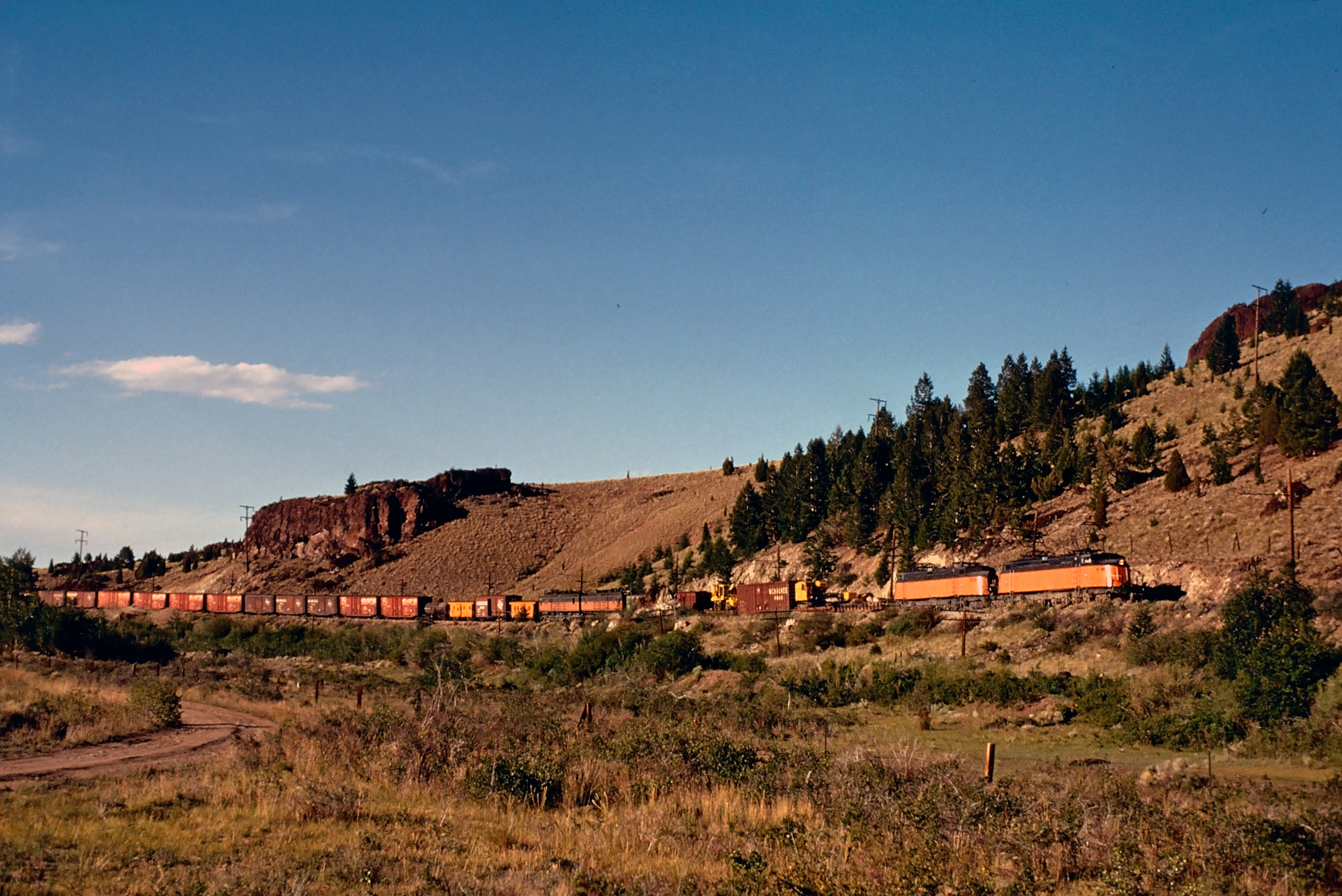 A pair of Milwaukee Road "Little Joes," led by E-20, are eastbound at Finlen, Montana - just west of Butte - on July 2, 1973. Note the pair of boxcabs, which are dead-in-tow and part of a work train being moved within the freight consist. Photographer unknown. American-Rails.com collection.
In his book, "Rock Island Requiem," author Gregory Schneider highlights how bad the issue became during the Penn Central bankruptcy hearings. Until deregulation the industry was not a true free market, everything (including any potential line abandonment) was controlled through the ICC.
Before Penn Central was folded into Conrail, Federal Railroad Administrator John Ingram highlighted the difficulty for any railroad to abandon an unprofitable branch. While touring the former Pennsylvania Railroad's Delmarva Peninsula trackage he said this during a speech highlighting the PC's plight:
"Let me tell you a little story about the abandonment of unprofitable branch lines. One weekend last summer I was headed for Rehoboth Beach, Delaware, to enjoy the Atlantic Ocean.
You have to drive across the Eastern Shore of Maryland to get there, and I asked my staff to list a few of those Eastern Shore branch lines that the Penn Central wants to abandon.
I wanted to see for myself - perhaps count the boxcars on sidings to see if there really was a shortage of business. I drove to the area, checked my maps, and simply couldn't find anything that looked like a railroad.
On Monday morning, I hollered at my staff for having sent me off on a wild goose chase, but they stuck to their guns. So we went back - this time with property maps and a surveyor.
We found the branch line, all right. At one place it was directly under a junkyard full of wrecked cars. At another point the highway department had covered the tracks with at least eight inches of pavement.
And just off the road we found a six-inch wide tree growing between the rails. That line had been completely forgotten, yet grown men were arguing before the ICC that that stretch of track was vital to the Nation's economy!"
By Decade
Great Locomotive Chase Of 1862 (Civil War)
The Great Railroad Strike Of 1877
United States Railroad Administration
Railroads In World War II, The 1940s
The Industry In Decline, The 1950s
Mergers And Bankruptcies, Railroads During The 1960s And 1970s
Railroads Of Today, The 1980s Onward
Official Guide Of The Railways (PDF's)
Early Railroads
Granite Railway, Our Country's First Railroad
Baltimore & Ohio, First Common-Carrier
Camden & Amboy, New Jersey's First Chartered Railroad
South Carolina Canal & Rail Road Company
Notable Figures
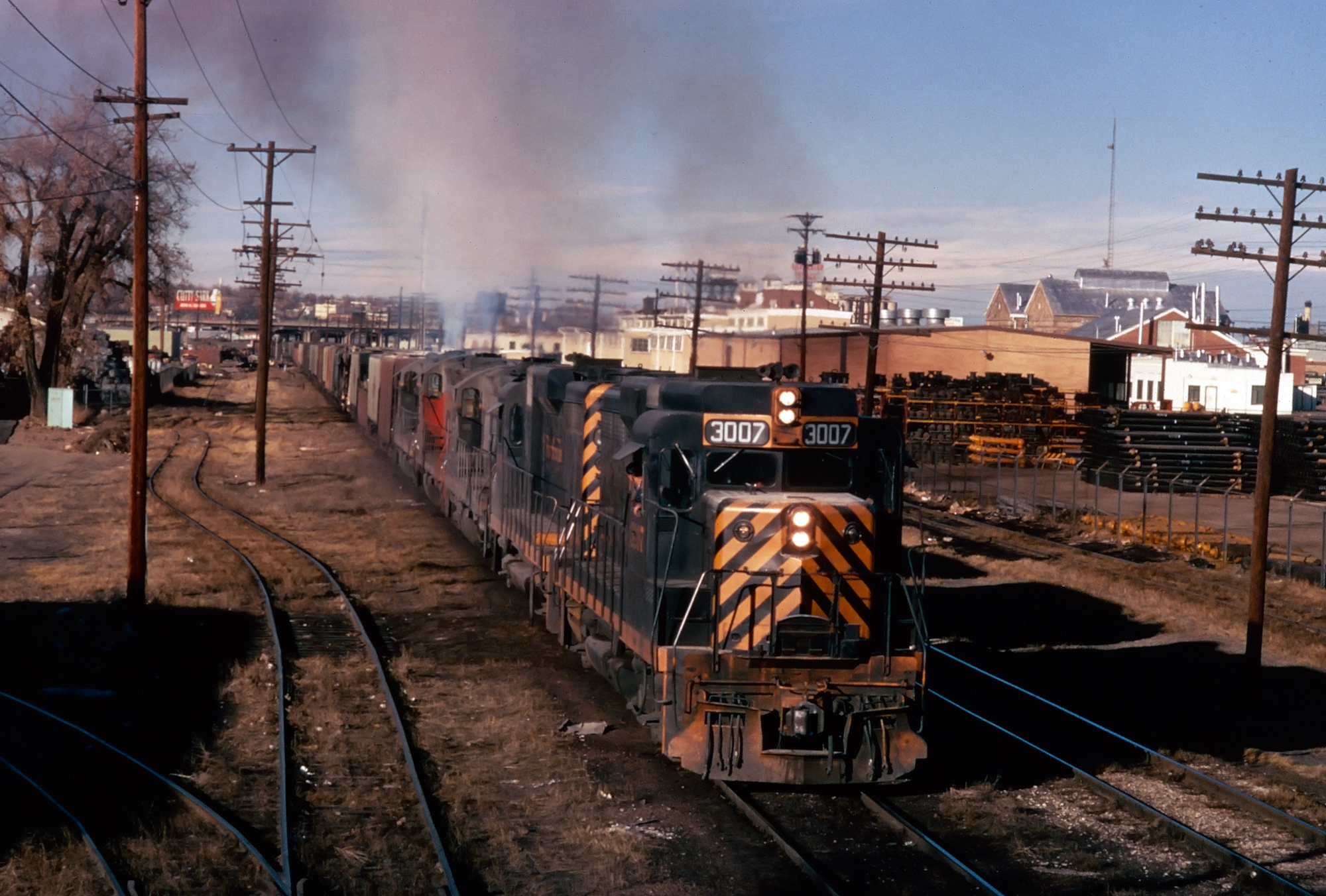 Rio Grande GP30's, on loan to the Burlington/Colorado & Southern, and a trio of C&S SD9's hustle through South Park Junction in Denver, Colorado; January, 1970. Tom Klinger photo. American-Rails.com collection.
Railroads of today would likely be very different if it wasn't for the Staggers Rail Act of 1980, proposed by Harley Staggers of West Virginia. Prior to this legislation there had been discussions of simply nationalizing the entire industry, a scary proposition that both executives and those in the government wished to avoid.
The bill brought a great level of deregulation as railroads regained their footing thanks to renewed freedom in setting freight rates and abandoning unprofitable rail lines.
The 1980s saw a slow recovery as Conrail posted its first profits in late 1981 and the mega-merger movement continued, creating today's Norfolk Southern Railway and CSX Transportation that decade. I
n the 1990's the trend continued as the Atchison, Topeka & Santa Fe Railway and Burlington Northern merged to form the Burlington Northern Santa Fe Railway in 1995.
Also, Union Pacific purchased the Chicago & North Western while Norfolk Southern and CSX gobbled up Conrail in 1999. The freight growth has continued into the 21st century. We have also seen a renaissance in rail travel as folks look to escape the highway gridlock.
Recent Articles


-
Ohio 'Whiskey Tasting' Train Rides
May 30, 26 11:57 AM
 LM&M's Bourbon Train stands out as one of the most distinctive ways to enjoy a relaxing evening out in southwest Ohio: a scenic heritage train ride paired with curated bourbon samples and onboard refr…
 -
Washington 'Whiskey Tasting' Train Rides
May 30, 26 11:56 AM
 Climb aboard the Mt. Rainier Scenic Railroad for a whiskey tasting adventure by train!"
 -
Texas 'Murder Mystery' Dinner Train Rides
May 30, 26 11:54 AM
 Here’s a comprehensive look into the world of murder mystery dinner trains in Texas.
 -
Arkansas 'Wine Tasting' Train Rides
May 30, 26 11:51 AM
 This article takes you through the experience of wine tasting train rides in Arkansas, highlighting their offerings, routes, and the delightful blend of history, scenery, and flavor that makes them so…
 -
California 'Wine Tasting' Train Rides
May 30, 26 11:48 AM
 This article explores the charm, routes, and offerings of these unique wine tasting trains that traverse California’s picturesque landscapes.
 -
Wisconsin 'Wine Tasting' Train Rides
May 30, 26 11:44 AM
 Wisconsin might not be the first state that comes to mind when one thinks of wine, but this scenic region is increasingly gaining recognition for its unique offerings in viticulture.
 -
Bessemer & Lake Erie Diesel Roster (All Time)
May 30, 26 11:40 AM
 The Bessemer & Lake Erie Railroad (B&LE) transitioned to diesel power efficiently, completing full dieselization in 1953 thanks to its focused heavy-haul profile.
 -
Bessemer & Lake Erie Steam Roster (Post 1900)
May 30, 26 11:30 AM
 The Bessemer & Lake Erie Railroad (B&LE), the vital iron ore and coal hauler linking Lake Erie docks at Conneaut, Ohio, to Pittsburgh-area steel mills, operated one of the most specialized steam fleet…
 -
Bangor & Aroostook Steam Roster (Post 1900)
May 29, 26 11:48 PM
 The Bangor & Aroostook Railroad (BAR), Maine’s legendary potato and paper hauler stretching deep into the Aroostook County wilderness, relied on a compact yet hardworking steam fleet for much of its i…
 -
Bangor & Aroostook Diesel Roster (All Time)
May 29, 26 11:33 PM
 BAR prioritized Electro-Motive Division (EMD) products for their reliability in harsh northern Maine winters and on light branch lines, resulting in a roster heavy on versatile road switchers.
 -
Western Pacific Timetables (August, 1952)
May 29, 26 10:09 PM
 These timetables capture the Western Pacific in the final golden years of its passenger operations—offering travelers one last chance to enjoy the dramatic scenery of the Feather River Route in comfor…
 -
Maine 'Dinner Train' Rides At Portland
May 29, 26 12:04 PM
 While this isn’t generally a “dinner train” railroad in the traditional sense—no multi-course meal served en route—Maine Narrow Gauge does offer several popular ride experiences where food and drink a…
 -
Nevada 'Dinner Train' Rides From Ely
May 29, 26 12:01 PM
 If you’ve ever wished you could step through a time portal into the hard-working world of a 1900s short line the Nevada Northern Railway in Ely is about as close as it gets.
 -
Connecticut 'Murder Mystery' Dinner Train Rides
May 29, 26 11:57 AM
 All aboard the intrigue express! One location in Connecticut typically offers a unique and thrilling experience for both locals and visitors alike, murder mystery trains.
 -
Alabama 'Wine Tasting' Train Rides
May 29, 26 11:51 AM
 While the state might not be the first to come to mind when one thinks of wine or train travel, the unique concept of wine tasting trains adds a refreshing twist to the Alabama tourism scene.
 -
Washington 'Wine Tasting' Train Rides
May 29, 26 11:48 AM
 Here’s a detailed look at where and how to ride, what to expect, and practical tips to make the most of wine tasting by rail in Washington.
 -
Colorado "Wild West" Train Rides
May 29, 26 11:36 AM
 If there’s one weekend (or two) at the Colorado Railroad Museum that captures that “living history” spirit better than almost anything else, it’s Wild West Days.
 -
SP&S Railway Timetables (August, 1952)
May 29, 26 09:45 AM
 The information presented here highlights the Spokane, Portland & Seattle Railway's timetables from the August, 1952 edition of the "Official Guide."
 -
Pacific Electric Railway Timetables (January, 1930)
May 28, 26 11:20 PM
 Featured here is the Pacific Electric's timetables listed in the January, 1930 edition of the "Official Guide Of The Railways."
 -
Delaware-Lackawanna Unveils Heritage M630 1776
May 28, 26 01:32 PM
 Genesee Valley Transportation Co., Inc. and “the” Delaware-Lackawanna Railroad Co. Inc. are proud to debut the historic repaint of locomotive #1776, at the D-L’s Von Storch shop in Scranton Pennsylvan…
 -
Michigan Independence Day Train Rides
May 28, 26 01:11 PM
 Each year on Independence Day, the Crossroads Village/Huckleberry Railroad comes alive with a special celebration that blends patriotism, family fun, and old-fashioned charm.
 -
Maryland Independence Day Train Rides
May 28, 26 11:37 AM
 The Walkersville Southern Railroad delivers a charming slice of railroad history through scenic excursions and themed special events. One of its most anticipated annual highlights is the Fireworks Tra…
 -
Kentucky "Wild West" Train Rides
May 28, 26 11:20 AM
 One of KRM’s most crowd-pleasing themed events is “The Outlaw Express,” a Wild West train robbery ride built around family-friendly entertainment and a good cause.
 -
Pennsylvania 'Wild West' Train Rides
May 28, 26 11:10 AM
 The Keystone State is home to a variety of historical attractions, but few experiences can rival the excitement and nostalgia of a Wild West train ride.
 -
Florida 'Wild West' Train Rides
May 28, 26 11:06 AM
 This article delves into wild west rides throughout Florida, the historical context surrounding them, and their undeniable charm.
 -
STB Accepts Revised Union Pacific-Norfolk Merger Application
May 28, 26 11:03 AM
 In a significant development for the U.S. freight rail industry, the Surface Transportation Board (STB) today accepted for consideration the revised major merger application filed by Union Pacific Cor…
 -
West Virginia 'Wild West' Train Rides
May 27, 26 01:26 PM
 While D&GV is known for several different excursions across the region, one of the most entertaining rides on its calendar is the Greenbrier Express Wild West Special.
 -
Arizona 'Wild West' Train Rides
May 27, 26 01:22 PM
 Let's delve into the captivating world of Arizona's Wild West train adventures, currently offered at the popular Grand Canyon Railway.
 -
Michigan 'Wild West' Train Rides
May 27, 26 01:18 PM
 While the term 'wild west' often conjures up images of dusty plains and expansive deserts, Michigan offers its own unique take on this thrilling period of history.
 -
Wisconsin 'Wild West' Train Rides
May 27, 26 01:15 PM
Through a unique blend of interactive entertainment and historical reverence, Wisconsin offers a captivating glimpse into the past with its Wild West train rides. -
Missouri "Father's Day" Train Rides
May 27, 26 01:01 PM
 If you're looking for a unique way to honor your dad this year, why not consider a scenic and historical train ride?
 -
Maryland "Father's Day" Train Rides
May 27, 26 11:38 AM
 Maryland offers some unique and picturesque train rides, including the Walkersville Southern that celebrates dad each June!
 -
Northwestern Steel & Wire: 1936 - 2001
May 26, 26 10:52 PM
 Northwestern Steel & Wire was a major steel manufacturer located in Sterling, Illinois operating from 1936-2001. It was also well known for its extensive industrial railroad, operating steam until 198…
 -
Amtrak Timetables (May, 1972)
May 26, 26 12:32 PM
 Presented here is Amtrak's complete timetable listing from the May, 1972 edition of "The Official Guide Of The Railways."
 -
Georgia 'Wild West' Train Rides
May 26, 26 12:22 PM
Nestled within its lush hills and historic towns, the Peach State offers unforgettable train rides that channel the spirit of the Wild West. -
New Hampshire Independence Day Train Rides
May 26, 26 12:17 PM
Climb aboard Granite State Railway's Firecracker Trains—a patriotic, family-friendly fireworks spectacular rolling right through the heart of New Hampshire's Lakes Region. -
Utah Independence Day Train Rides
May 26, 26 12:14 PM
 Every July, as America celebrates its birthday, the Heber Valley Railroad in Heber City, Utah, rolls out a special tradition: the Freedom Train.
 -
North Carolina "Wild West" Train Rides
May 26, 26 12:12 PM
 North Carolina, a state known for its diverse landscapes ranging from serene beaches to majestic mountains, offers a unique blend of history and adventure through its Wild West train rides.
 -
Pennsylvania 'Wild West' Train Rides
May 26, 26 12:00 PM
 The Keystone State is home to a variety of historical attractions, but few experiences can rival the excitement and nostalgia of a Wild West train ride.
 -
Maine "Father's Day" Train Rides
May 26, 26 11:46 AM
 This year for Father's Day, why not trade the conventional gifts and barbeque in for something exceptional—a scenic train ride across the beautiful state of Maine.
 -
Minnesota "Father's Day" Train Rides
May 26, 26 11:43 AM
 If you're in Minnesota and looking for a unique way to spend this day with your dad, consider taking a scenic train ride.
 -
Pennsylvania Independence Day Train Rides
May 25, 26 11:58 AM
 Pennsylvania’s rich railroad heritage comes alive every Independence Day, but 2026—the nation’s semiquincentennial—offers extra patriotic flair.
 -
Ohio 'Wild West' Train Rides
May 25, 26 11:40 AM
 For those enamored with tales of the Old West, Ohio's railroad experiences offer a unique blend of history, adventure, and natural beauty.
 -
New York 'Wild West' Train Rides
May 25, 26 11:37 AM
Join us as we explore wild west train rides in New York, bringing history to life and offering a memorable escape to another era. -
Kentucky "Father's Day" Train Rides
May 25, 26 11:34 AM
 Kentucky offers a variety of historic and scenic train excursions that provide an unforgettable way to honor and spend quality time with fathers.
 -
Kansas "Father's Day" Train Rides
May 25, 26 11:33 AM
In this guide, we'll explore some of the best train rides available for Father's Day in Kansas. -
Vermont Independence Day Train Rides
May 25, 26 11:21 AM
 On Independence Day, elements come together to offer a unique experience in Vermont: train rides that combine scenic beauty with patriotic celebrations.
 -
Georgia Independence Day Train Rides
May 24, 26 12:26 PM
 As the 4th of July approaches in 2026, the Blue Ridge Scenic Railway in Blue Ridge, Georgia, invites you to celebrate America in true patriotic style aboard its Firecracker Special.
 -
Illinois Independence Day Train Rides
May 24, 26 11:58 AM
 As America gears up for the 4th of July in 2026, the Illinois Railway Museum (IRM) in Union, Illinois, offers the perfect blend of patriotic festivities, family-friendly excitement, and living railroa…
 -
Alabama Independence Day Train Rides
May 24, 26 11:55 AM
 For those seeking a unique way to celebrate the Fourth of July, Alabama offers a distinctive experience: honoring veterans and active military personnel on Independence Day by train.


.%20%20American-Rails.com%20collection.)


